
Water Wisteria Care: Planting, Propagation, and Low-Tech Setup Guide
Learn how to grow water wisteria in a low-tech planted aquarium, covering substrate planting, floating stems, lighting, and rapid propagation.

By Sharon Ben-Moshe, Founder, The Aquarium Adviser
Published / 4 min read
In this guide
Water wisteria is a versatile, fast-growing stem plant prized for its bright green lace foliage and low-tech ease of care.
Known scientifically as Hygrophila difformis, water wisteria is native to marshy riverbanks and shallow waters across the Indian subcontinent (India, Nepal, Bangladesh, and Myanmar). Learn about its taxonomy and wetland distribution in the Wikipedia entry on Hygrophila difformis.
Its rapid nutrient uptake and adaptability make it a staple in beginner setups and high-end aquascapes alike. Explore other beginner choices in our list of the 21 best plants for freshwater aquariums.
The Phenomenon of Heterophylly (Leaf Shape Transformation)
New hobbyists are often surprised when their newly purchased water wisteria looks different from aquarium photos. This occurs because the plant exhibits heterophylly:
- Emersed Form (Above Water): When grown in commercial plant nurseries with leaves in the air, wisteria produces thick, dark-green leaves with round, slightly toothed edges.
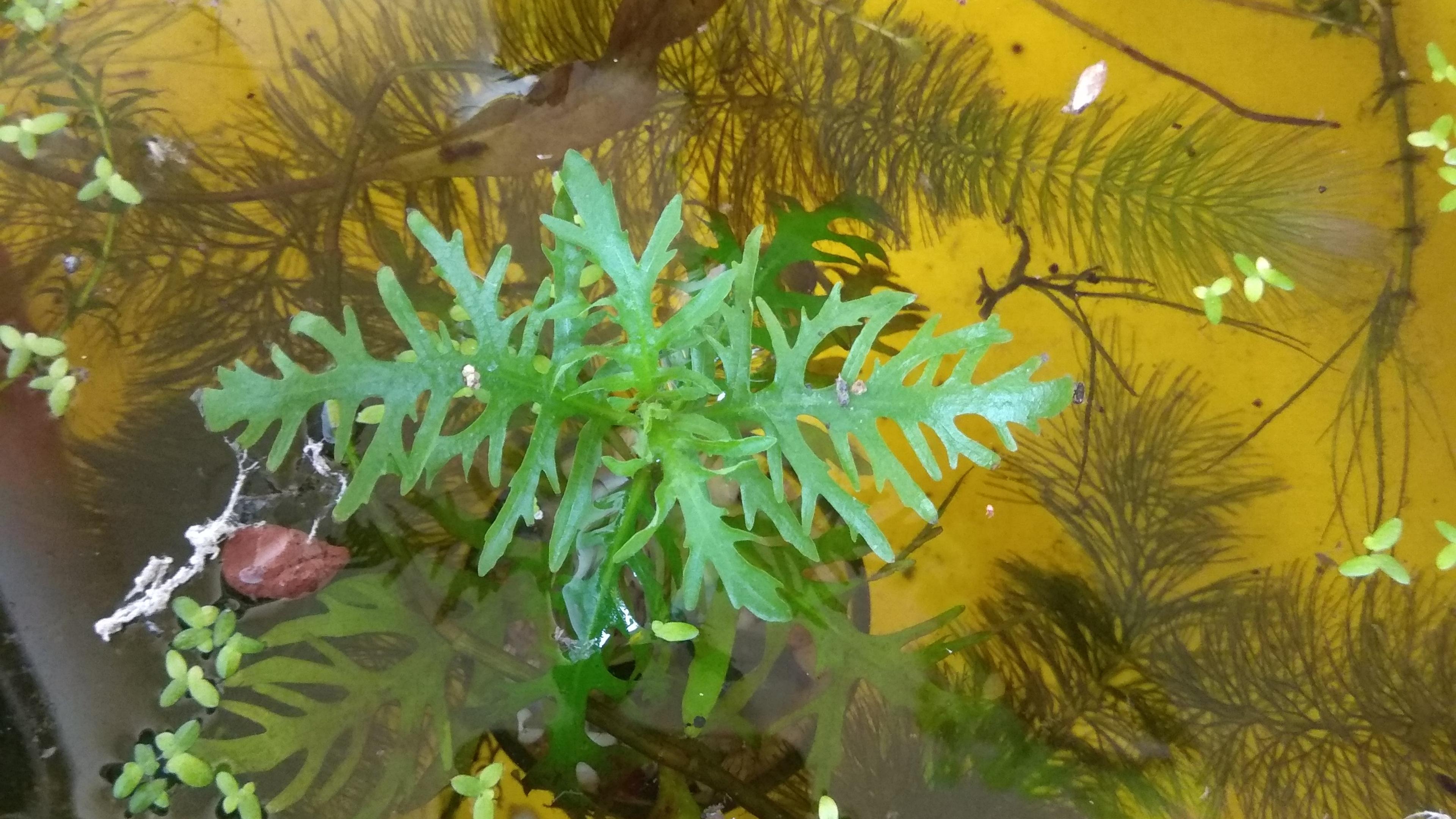
- Submerged Form (Underwater): Within two to three weeks of submersion in your tank, new growth develops deeply lobed, lace-like foliage resembling oak or fern leaves.
- Conversion Phase: The older emersed leaves will gradually melt away as the new aquatic leaves take over. For handling this transition, read our troubleshooting guide on why aquarium plants melt after planting.
| Husbandry Factor | Recommended Range | Target Condition |
|---|---|---|
| Lighting | Low to Moderate | 6-8 hours daily |
| Water Temperature | 72-82°F (22-28°C) | 75-78°F (24-25.5°C) |
| pH Level | 6.5-7.5 | 6.8-7.2 |
| Hardness | 3-15 dGH | 5-10 dGH |
| Growth Rate | Fast | Requires bi-weekly trimming |
| Fertilizer Needs | Micro and macro fertilizers | Water column dosing |
Planting Options: Substrate vs. Floating
Water wisteria adapts easily to two different planting methods:
1. Rooted Stem in Substrate
Insert individual stem cuttings into fine gravel, sand, or aquasoil:
- Strip the leaves from the bottom two inches of stem before planting.
- Bury the bare stem firmly in substrate; white roots will anchor within five to seven days.
- Group three to five stems together in the background to form a lush green bush.
2. Floating Forest
Alternatively, let stem cuttings float loosely at the surface:
- Stems develop hanging adventitious roots that draw nutrients from the water.
- Creates surface cover for shy fish and shrimp.
- Can be grown horizontally across driftwood to create a creeping midground carpet.
Learn how to build a thriving aquarium without specialized gas equipment in our guide on how to setup a planted aquarium without CO2.
Lighting and Nutrient Requirements
Water wisteria thrives under moderate LED aquarium lighting (20-40 PAR). Under intense light and balanced nutrients, its lace-like foliage grows very dense; under low light, the leaves grow slightly wider and growth slows down.
Because wisteria absorbs nutrients from both the water column and its roots, dose a comprehensive all-in-one liquid fertilizer weekly containing potassium, iron, and trace elements. Adding root tabs beneath planted stems supports thicker stem growth and prevents pinholes in older leaves.
In setups with high fish stocking, wisteria absorbs excess nitrates and phosphates eagerly, preventing algae outbreaks on glass and decorations.
Pruning and Propagation
Because water wisteria grows quickly, regular pruning keeps it looking tidy:
- Use aquascaping shears to trim stems when they reach the water surface.
- Replant top trimmings into empty substrate areas to create new bushes.
- Side shoots will sprout from the cut stem, making the original plant bushier.
Regular trimming also prevents the plant from shading out slower-growing foreground carpets like Cryptocorynes and Anubias.
Aquascaping Uses: Background Bushes and Creeping Carpets
Water wisteria's morphological flexibility makes it uniquely valuable for various aquascaping roles, from dense background forests to unique creeping midground bushes.
Creative aquascaping techniques with wisteria:
- Dutch-Style Background Wall: Plant six to eight trimmed stems closely together in a tiered row along the rear glass. Regular pruning prompts bushy side shoots that create a continuous, bright-green lace wall that contrasts vividly with dark red stem plants like Ludwigia or Alternanthera.
- Creeping Midground Carpet: Rather than planting stems vertically, use plant anchors or smooth pebbles to pin a healthy stem horizontally along the substrate. Nodes along the horizontal stem will sprout roots downward and send compact vertical shoots upward, creating a lush, creeping bushy carpet.
- Surface Shade Diffuser: Allow several stem cuttings to float loosely beneath intense aquarium light fixtures. The lace foliage creates dappled shadows that encourage shy fish to swim in open midwater.
Water wisteria also functions as a natural water quality indicator in high-bioload tanks. When nutrient levels are well balanced, its leaves display bright lime-green foliage with intricate, feathery lobes. If lower leaves begin yellowing or dropping, it typically indicates a potassium or iron deficiency that can be resolved with standard liquid aquarium fertilizer dosing. Regular trimming keeps the growth compact and prevents lower stems from losing foliage.
Frequently asked questions
Why do water wisteria leaves look different after planting?
Water wisteria exhibits heterophylly (variable leaf shape). Commercial nurseries grow it emersed (above water), where it produces solid, rounded leaves. Once submerged underwater, it develops delicate, deeply lobed, lace-like foliage.
Can water wisteria grow without added CO2?
Yes, water wisteria is one of the best low-tech plants and grows vigorously under moderate light without pressurized CO2 injection or specialized substrates.
Can you float water wisteria instead of planting it?
Yes, water wisteria can be left floating at the water surface, where it will develop hanging white roots that draw nutrients directly from the water column while providing shelter for fry.
How do you propagate water wisteria?
Simply trim a 4-to-5-inch stem cutting containing at least one leaf node using clean scissors, remove the bottom leaves, and insert the stem into substrate. It will grow roots within a week.
Related guides
Limnophila Sessiliflora Care: Fast-Growing Background Stem Plant Guide
Learn how to grow Limnophila sessiliflora as an easy alternative to Cabomba, master stem pruning, control rapid growth, and balance low-light nutrients.
Staurogyne Repens Care: Foreground Carpet Setup, Pruning, and Lighting
Learn how to grow Staurogyne repens as a lush foreground carpet, master horizontal branching through pruning, and provide proper substrate nutrition.
CO2 Drop Checker Guide: 4 dKH Solution, Color Chart, and Placement Rules
Learn how to use an aquarium CO2 drop checker, prepare 4 dKH reference solution, interpret color charts, and avoid gas toxicity in planted tanks.
Root Tabs vs Liquid Fertilizer in Aquariums: Substrate Feeding vs Water Column
Compare root tabs vs liquid fertilizers in planted aquariums. Learn which plants require substrate feeding, which feed from the water column, and how to balance both.
Aquarium Plant Melting: Emersed Transition, Nutrient Shocks, and Recovery
Understand why new aquarium plants melt, distinguish emersed-to-submersed transitions from water chemistry shock, and learn proper recovery steps.
Amazon Sword Nutrient Deficiencies: Yellow Leaves, Pinholes, and Root Tab Fixes
Diagnose Amazon sword nutrient deficiencies, recognize iron chlorosis and potassium pinholes, and revive starving plants with targeted root fertilizers.
Photo by Djlayton4 , Daniel J. Layton on Wikimedia Commons (CC BY-SA 3.0)