
Glowlight Tetra Care and Tank Setup Guide
Proper glowlight tetra care requires a stable, dimly lit tank with dark substrate and a tight school of at least eight fish. Learn how to maintain ideal water parameters, feed a balanced diet, and choose peaceful tank mates.

By Sharon Ben-Moshe, Founder, The Aquarium Adviser
Updated / 7 min read
In this guide
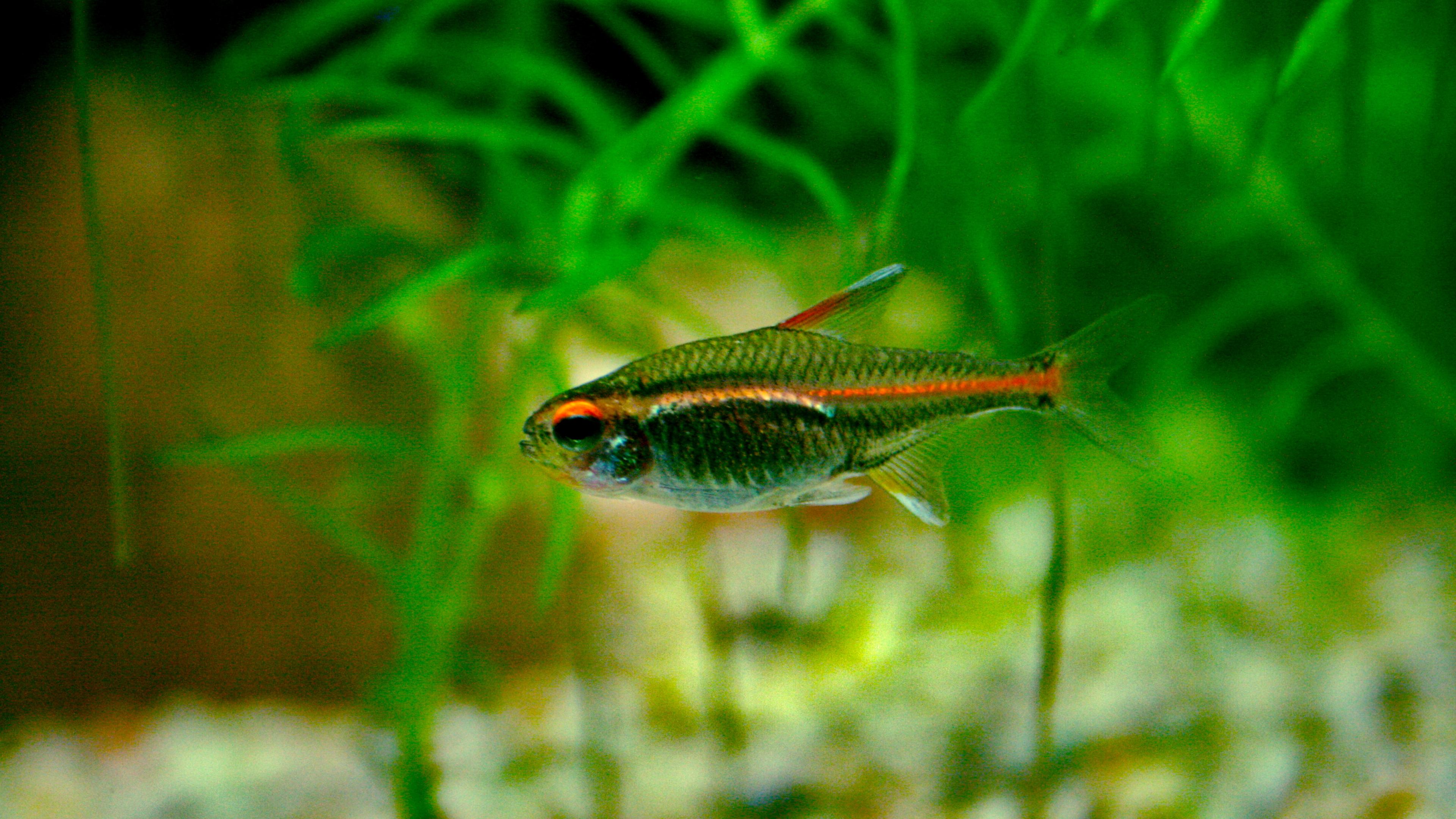
Successful glowlight tetra care and tank setup relies on soft, slightly acidic water, subdued lighting, and a cohesive school of at least eight to ten fish. Originating from shaded forest streams in Guyana, this peaceful characin displays an iridescent reddish-orange lateral stripe across a translucent body when kept in proper conditions.
Glowlight tetra profile and aquarium parameters
First described by Carl H. Eigenmann and Lola Vance in 1909 and formally designated as Hemigrammus erythrozonus, this small characin hails from the Essequibo River basin in Guyana. Scientific records on Wikipedia's entry on Hemigrammus erythrozonus and the FishBase species summary describe the species inhabiting shaded, slow-flowing forest streams and clearwater tributaries.
Beginners occasionally confuse glowlight tetras with commercial GloFish. GloFish carry patented fluorescent protein genes introduced through laboratory genetic modification. Glowlight tetras are a distinct, naturally occurring species. Their distinctive glow comes from optical light refraction across specialized guanine crystals, paired with a line of red-orange epidermal chromatophores that respond directly to water quality and diet.
| Parameter | Acceptable Range | Ideal Target |
|---|---|---|
| Minimum Tank Size | 10 gallons (starter) | 20 gallons long (75 cm) |
| Water Temperature | 74-82°F (23-28°C) | 76-78°F (24.5-25.5°C) |
| pH Level | 5.8-7.5 | 6.4-7.0 |
| General Hardness (GH) | 3-12 dGH (50-200 ppm) | 4-8 dGH (70-140 ppm) |
| Carbonate Hardness (KH) | 1-6 dKH (18-107 ppm) | 2-4 dKH (35-70 ppm) |
| Minimum School Size | 6 fish | 8-12 fish |
| Adult Body Size | 1.4-1.6 inches (3.5-4.0 cm) | 1.5 inches (3.8 cm) |
| Aquarium Zone | Midwater | Midwater to lower third |
Captive stocks bred over generations in commercial hatcheries adapt well to moderate water conditions, yet wild physiology still dictates their preferences. High carbonate hardness and pH levels above 7.8 will dull their colors and suppress spawning activity. Ammonia and nitrite must remain at 0 ppm at all times, with nitrate held below 20 ppm through biological filtration and weekly water changes.
What tank size and setup do glowlight tetras need?
Tank geometry matters far more than total water volume for active characins. A standard 10-gallon tank measures 20 inches across, which provides just enough room for a small starter group. A standard 20-gallon long tank measures 30 inches long, offering 50 percent more linear swimming space. This extended footprint allows the school to form cohesive horizontal lines and glide naturally from one side of the layout to the other.
Substrate selection influences coloration:
- Dark substrates like black inert quartz sand, dark river gravel, or planted aquasoil absorb excess light. Light sand or bright gravel reflects light upward, causing the fish to bleach their reflective cells as a defensive camouflage response.
- A matte black background on the rear glass hides equipment tubing and creates contrast behind green plant leaves.
- Floating plants like Amazon frogbit (Limnobium laevigatum) and salvinia create dappled shade that encourages fish to use the open midwater area.
- Dense stems and broad-leaf plants such as Cryptocoryne wendtii and Java fern along the corners provide sheltered resting pockets, leaving the central corridor clear for schooling.
- Botanicals such as dried catappa leaves, alder cones, or Malaysian driftwood release humic acids and natural tannins into the water column. Detailed habitat observations in the Seriously Fish species profile emphasize that these botanicals tint the water tea-brown, replicate wild Essequibo tributaries, and support skin health.
How many glowlight tetras should you keep together?
Glowlight tetras are obligate schooling fish. In the wild, their iridescent stripes help individuals track one another in dark, tannin-stained waters, allowing the group to coordinate evasive maneuvers against predators.
Social numbers determine behavioral health:
- A group of six fish represents the bare survival minimum. In groups smaller than six, glowlight tetras become reclusive, spending most daylight hours hidden behind filter tubes or low foliage.
- Keeping 8 to 12 individuals establishes a secure social structure. The fish spend their time out in the open, displaying synchronized turning and calm swimming patterns.
- Groups of 15 or more in aquariums of 30 gallons or larger create an active schooling display. Dominant males stake out small temporary territories between plant thickets, flaring their fins in harmless ritualized displays.
- Unlike certain boisterous characins, glowlight tetras do not nip fins. Their sparring consists of brief parallel swimming displays with flared fins that break off after a few seconds without fin tears or missing scales.
Hobbyists exploring peaceful schooling characins often compare these fish with species from our ember tetra care guide or note how their warm red stripe complements the deep coloration detailed in our black neon tetra care walkthrough.
What are the best tank mates for glowlight tetras?
Because glowlight tetras are gentle and stay under two inches, aggressive or fast-feeding tank mates will outcompete or intimidate them. Choose peaceful species that share their preference for warm, clean water and moderate water movement.
Compatible community species:
- Small characins and cyprinids make natural companions. Combining glowlight tetras with the blue and red accents described in our neon tetra care guide creates contrast in midwater zones.
- Surface-dwelling species such as those covered in our marbled hatchetfish care guide occupy the top inch of the aquarium, leaving the middle water layers completely open for the tetras.
- Small bottom-dwelling catfish, including pygmy corydoras (Corydoras pygmaeus), panda corydoras, and dwarf otocinclus, scavenge fallen food and graze on biofilm without bothering the school.
- Honey gouramis (Trichogaster chuna) move slowly and provide a calm centerpiece presence without predatory aggression.
- Freshwater dwarf shrimp, including red cherry shrimp (Neocaridina davidi) and Amano shrimp (Caridina multidentata), thrive alongside glowlights. Adult shrimp are far too large for their small mouths, though unprotected newborn shrimplets may be eaten.
Species to avoid:
- Large predatory cichlids such as angelfish, oscars, or green terrors view miniature tetras as food once the cichlids mature.
- Fast, aggressive fin nippers like tiger barbs or serpae tetras can harass glowlights and outcompete them during feeding times.
- Cool-water species like goldfish or white cloud mountain minnows require temperatures below the comfort zone of tropical characins.
Feeding and daily nutrition for bright coloration
Wild glowlight tetras are micropredators feeding on microcrustaceans, small insect larvae, worms, and tiny fallen invertebrates. Their mouths are small and upturned, designed to snatch food drifting down through the water column rather than foraging from the substrate surface.
Recommended daily foods:
- Slow-sinking micro-pellets with diameters between 0.5 mm and 0.8 mm provide a balanced staple. These granules stay suspended in the midwater zone where the school feeds most actively.
- High-grade microflakes crushed between your fingertips supply vitamins and minerals. Look for formulas containing whole fish meal, spirulina, and squid meal.
- Live and frozen foods offer essential fatty acids and protein. Offer baby brine shrimp (Artemia nauplii), daphnia, Moina, and frozen cyclops three to four times per week.
- Natural carotenoids found in microcrustaceans like cyclops directly enhance the red and orange pigments along their lateral stripe.
Feeding schedule and rules: Offer small amounts once or twice daily, dispensing only what the fish can consume within 90 seconds to two minutes. Because these fish rarely feed off the substrate floor, excess food will decay quickly in the gravel. A gentle current from an adjustable hang-on-back filter or a foam sponge filter keeps food particles drifting in midwater where tetras can easily catch them.
How to breed glowlight tetras and raise fry
Breeding glowlight tetras requires patience and precise water chemistry. Because adult tetras eat their own eggs on sight, a separate 5-10 gallon spawning aquarium is necessary for raising fry.
Spawning setup and water adjustments:
- Set up a small bare-bottom tank equipped with an aged sponge filter and a preset heater calibrated to 78-80°F (25.5-26.7°C).
- Place several large clumps of Java moss, subwassertang, or synthetic yarn spawning mops on the bottom to catch sinking eggs and protect them from adult mouths.
- Water hardness must be very low, ideally 1-3 dGH, with a pH between 6.0 and 6.5. Using reverse osmosis (RO) water remineralized with trace amounts of buffer creates the necessary softness.
- Dim the lighting completely. Glowlight tetra eggs and newly hatched embryos are photosensitive, and strong light can kill developing embryos.
Conditioning and spawning:
- Separate males and females for 7 to 10 days before breeding. Condition them heavily with live daphnia, blackworms, and frozen brine shrimp. Ripe females will swell visibly with eggs, while males develop deep coloration and display active posturing.
- Place a well-conditioned pair or a small group of two males and one female into the breeding tank in the evening.
- Spawning usually takes place at dawn. The male courts the female with shivering movements, guiding her over the moss where she scatters between 100 and 300 adhesive eggs.
- Remove the parent fish immediately once egg scattering stops.
Fry care and feeding:
- Eggs hatch in 24 to 36 hours. The microscopic fry remain attached to plant surfaces, consuming their yolk sacs over the next three to four days.
- Once the fry become free-swimming, feed them infusoria, paramecia, or commercially prepared liquid fry food several times daily.
- After 7 to 10 days of growth, transition the fry to freshly hatched brine shrimp nauplii and microworms. Frequent, small water changes using conditioned water matched in temperature and pH ensure steady growth and high survival rates.
Frequently asked questions
What size tank do glowlight tetras need?
A 10-gallon tank can house a small starter group of six glowlight tetras, but a 20-gallon long aquarium is the ideal minimum for a proper school. The 30-inch length provides ample horizontal swimming room, which encourages natural schooling and leaves space for perimeter plants.
Are glowlight tetras the same as GloFish?
No, glowlight tetras are a naturally occurring wild species (Hemigrammus erythrozonus) native to the Essequibo River basin in Guyana. GloFish are genetically modified fish that have fluorescent protein genes inserted in a laboratory. Glowlight tetras produce their glowing red-orange stripe naturally through light-refracting guanine crystals and dietary carotenoids.
How long do glowlight tetras live in an aquarium?
With stable water parameters, low nitrates, and a varied diet, glowlight tetras typically live between three and five years in captivity. Consistent weekly water changes and peaceful tank mates help them reach the upper end of that lifespan.
Can glowlight tetras live with neon tetras?
Yes, glowlight tetras and neon tetras make excellent tank mates because they share identical water parameter requirements and peaceful temperaments. Both species occupy the midwater zone without competing aggressively, and their contrasting red-orange and blue hues look attractive together in planted aquariums.
Why do glowlight tetras lose their red color?
Glowlight tetras lose their coloration primarily due to bright lighting, light-colored gravel, poor water conditions, or stress from bullying tank mates. Switching to dark substrate, adding floating plants to soften illumination, and feeding foods containing astaxanthin or baby brine shrimp will restore their bright red stripe.
Related guides
Diamond Tetra Care in Planted Aquariums: Setup, Diet, and Behavior
Diamond tetras thrive in planted aquariums with gentle water flow, moderate hardness, and schools of eight or more. Learn how to maintain iridescent scales and protect delicate foliage.
Dwarf Chain Loach Care Guide: Setup, Schooling, and Diet
Providing proper dwarf chain loach care requires a planted aquarium of at least 20 gallons, a social group of six or more fish, and a soft sand substrate. These active botiid loaches spend hours shoaling in midwater while hunting pest snails and microfauna across the bottom.
Marbled Hatchetfish Care: Tank Setup, Schooling, and Feeding
Learn how to maintain a healthy group of marbled hatchetfish with escape-proof lids, calm surface flow, and live floating foods. Discover the water parameters and tank mates these specialized Amazonian characins need to thrive.
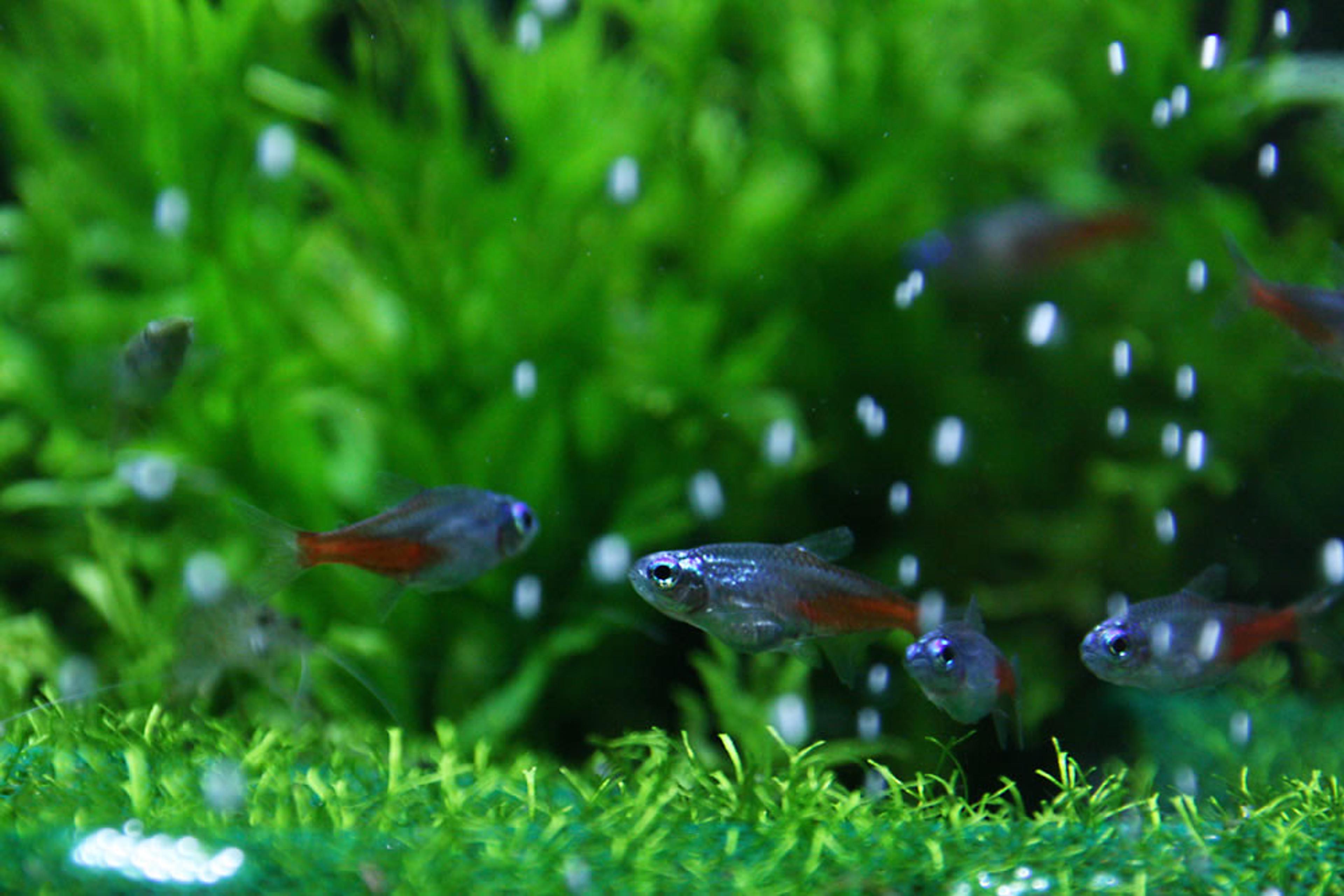
Neon Tetra Disease Symptoms, Treatment, and Diagnosis
True neon tetra disease is an incurable parasitic infection of muscle tissue caused by Pleistophora hyphessobryconis. Recognizing early symptoms and distinguishing them from treatable bacterial columnaris protects community aquariums from devastating losses.
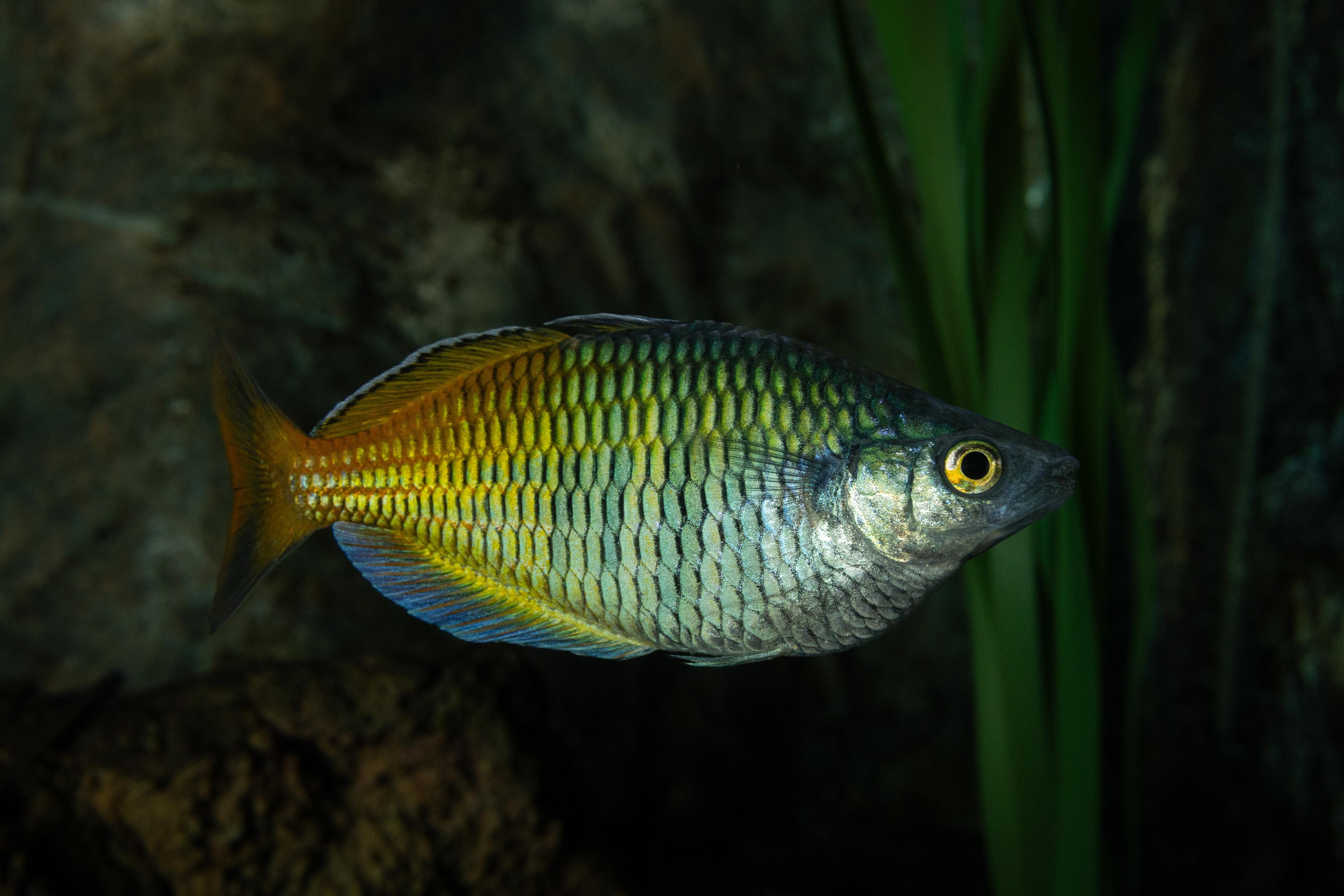
Boesemani Rainbowfish Care Guide: Tank Size, Water, and Diet
Learn how to care for Boesemani rainbowfish with proper 4-foot tank dimensions and hard alkaline water parameters. A balanced, protein-heavy diet ensures males develop their classic two-toned coloration.
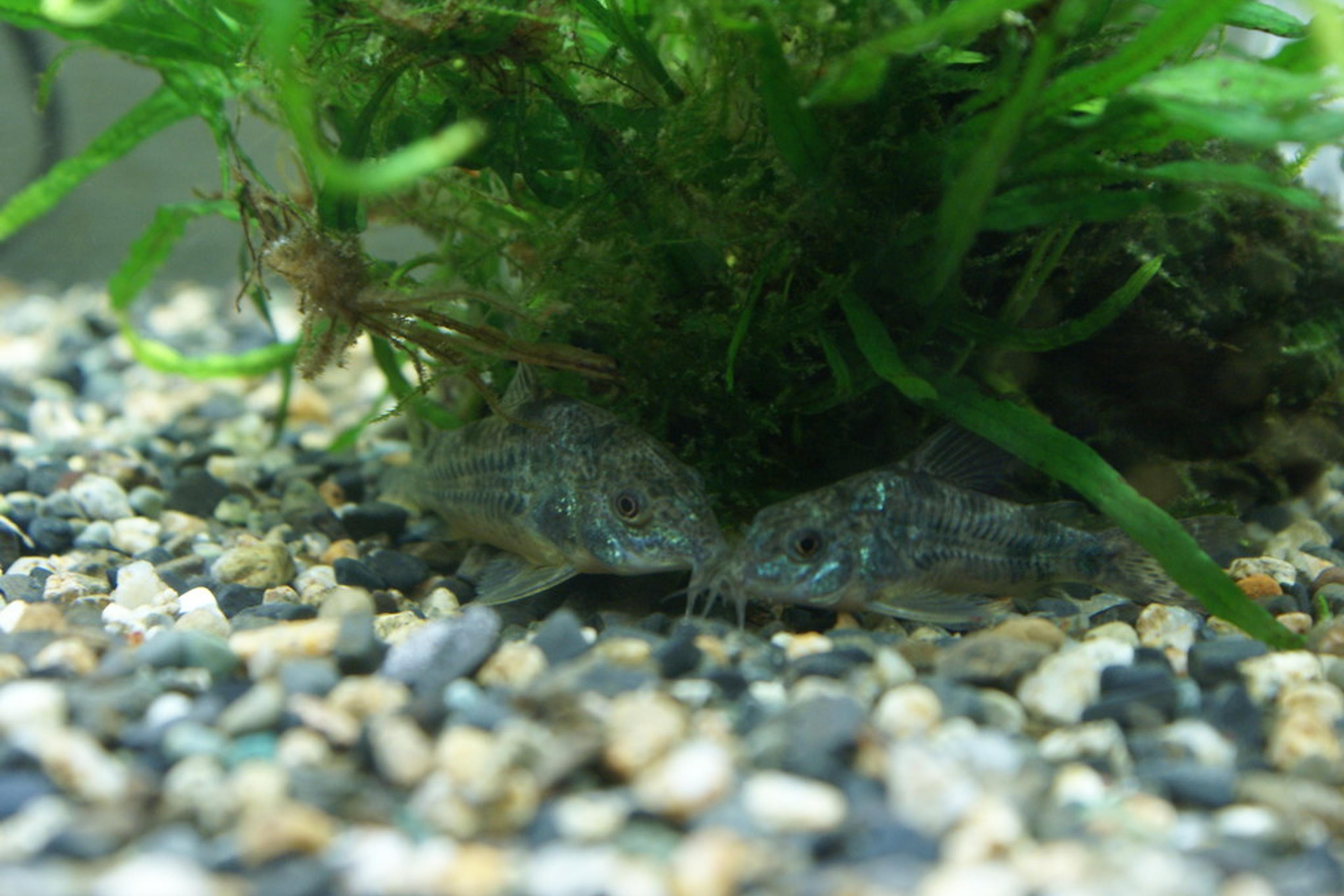
Peppered Corydoras Care Guide: Tank Setup, Substrate, and Breeding
Peppered corydoras thrive in cool freshwater aquariums with soft sand substrates, steady filtration, and a social group of six or more. Learn how to maintain ideal water parameters, safeguard sensory barbels, and trigger natural spawning.