
Clown Killifish Care: Epiplatys Annulatus Nano Setup, Feeding, and Flow
Learn how to care for clown killifish (Epiplatys annulatus), set up low-flow nano tanks, provide floating plant cover, and feed surface live foods.

By Sharon Ben-Moshe, Founder, The Aquarium Adviser
Published / 4 min read
In this guide
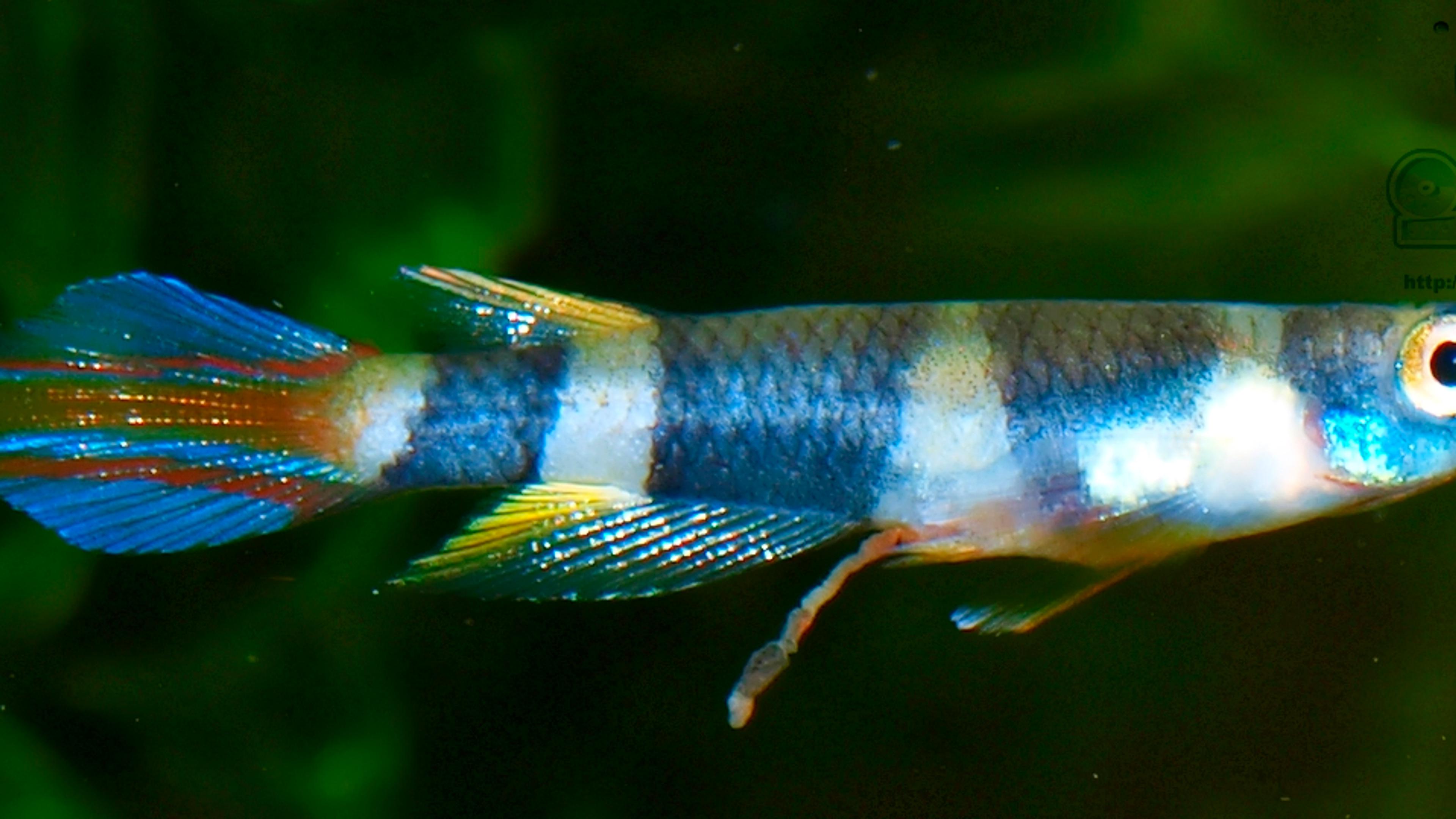
The clown killifish (Epiplatys annulatus), often affectionately called the banded panchax or rocket killifish, is a miniature surface-dwelling jewel native to the warm, heavily vegetated coastal rainforest swamps of Guinea, Liberia, and Sierra Leone in West Africa. Reaching a maximum adult length of barely 1.2 to 1.4 inches (3-3.5 cm), it features four bold black vertical bars over a cream-colored body, capped by glowing iridescent blue eyes and a flame-patterned caudal fin that resembles a launched rocket. For species classification, see the Wikipedia summary on Epiplatys annulatus.
Unlike annual killifish that live ephemeral lives in temporary rain puddles, Epiplatys annulatus is a non-annual species adapted to permanent freshwater creeks and shaded marshes. They live for several years in captivity and will breed continuously among floating plants when provided with calm, slightly acidic water.
Habitat and Water Parameter Preferences
In West African coastal swamps, clown killifish inhabit shallow, tea-colored blackwater pools shaded by dense forest canopies. The water is soft, warm, and practically still:
| Parameter | Recommended Range | Ideal Target | Notes |
|---|---|---|---|
| Temperature | 72-80°F (22-27°C) | 75-77°F (24-25°C) | Avoid temperature spikes above 82°F |
| pH Level | 5.5-7.2 | 6.2-6.8 | Thrives in soft, slightly acidic water |
| General Hardness (GH) | 2-8 dGH | 3-5 dGH | Low mineral content mimics native swamps |
| Carbonate Hardness (KH) | 1-4 dKH | 2-3 dKH | Low buffering; monitor pH stability |
| Water Flow | Very Low | Minimal surface disturbance | Strong current exhausts surface hunters |
| Tank Size | 5 to 10 Gallons | 10 Gallons | Perfect for desktop planted nano tanks |
To recreate their natural blackwater conditions, add Indian almond leaves, alder cones, or peat moss into the aquarium, as detailed in our guide on blackwater aquarium setup botanicals.
Surface Design: Floating Plants and Jump Prevention
Anatomically, Epiplatys annulatus is built exclusively for the top inch of the water column. Its flattened back and upturned mouth are designed to skim the water-air interface:
- Floating Plant Canopy: Dense floating vegetation is mandatory. Introduce Amazon frogbit, red root floaters, or dwarf water lettuce. The tangled roots provide natural micro-territories where timid females can rest away from energetic courting males.
- Zero Turbulence: Standard power filter outflows create too much surface turbulence for these miniature fish, driving them down into the midwater where they feel stressed. Use a gentle air-driven sponge filter adjusted to a slow, gentle bubble rate, following our recommendations in sponge filter vs hang on back filter.
- Completely Sealed Lids: Clown killifish are world-class jumpers. They can launch themselves several inches out of water to capture flying insects. Cover every gap around filter returns and cables with plastic mesh or sponge foam.
Surface Nutrition and Compatible Tank Mates
Clown killifish have small, upward-facing mouths and rarely feed from the substrate:
- Live Surface Foods: Wingless fruit flies (Drosophila melanogaster), springtails, and live baby brine shrimp are eagerly consumed from the surface film.
- Frozen Diets: Offer thawed baby brine shrimp, cyclops, and finely minced frozen daphnia delivered via pipette directly into the floating plant roots.
- Micro-Dry Foods: High-protein crushed micro-pellets and spirulina powders that float on the surface film can be introduced once fish are settled.
Because of their tiny size, keep clown killifish in a species-only nano tank or pair them with gentle, non-predatory tank mates: chili rasboras, pygmy corydoras, and docile Neocaridina shrimp. Avoid keeping them with boisterous midwater schooling fish or fin-nippers that outcompete them for surface food.
Maintain steady parameters through gentle weekly water changes using pre-conditioned, temperature-matched water, following how often to do aquarium water changes to ensure this miniature killifish flourishes.
Breeding and Raising Fry in Nano Setups
Clown killifish reproduce readily in well-planted nano aquariums when provided with gentle conditions and live foods. Spawning occurs along dense mats of floating roots, particularly under floating plants or acrylic spawning mops. Females deposit adhesive eggs daily, which take approximately ten to fourteen days to hatch at 74 degrees Fahrenheit. Because adult fish will prey on their own offspring, remove egg-laden mops into a separate shallow container with identical water parameters and light aeration. Newly hatched fry are microscopic surface feeders that require green water cultures, live paramecium, or liquid infusoria for their first week before graduating to freshly hatched baby brine shrimp.
Tank Lid Security and Surface Habitat
Clown killifish are world-class jumpers that spend their waking lives within the top half-inch of the water column. In their native coastal swamps, they leap across surface barriers to catch low-flying gnats or escape aquatic predators. In home aquariums, even a pencil-sized opening in your lid or filter cutouts can lead to fatal jumps onto the floor. Seal all canopy gaps with craft mesh or aquarium-safe sponge foam. Maintain floating plant cover across at least seventy percent of the surface, creating natural security that deters jumping instincts while giving timid males territories to patrol.
Frequently asked questions
Are clown killifish annual or non-annual killifish?
Clown killifish (Epiplatys annulatus) are non-annual killifish. In nature, they inhabit permanent coastal swamps and streams that do not dry out seasonally. With proper care in a home aquarium, they live for 2 to 3 years rather than perishing within a few months.
Why do clown killifish stay right at the water surface?
Clown killifish have an upturned mouth, flat head, and dorsal fin positioned far back on the body, anatomically engineered for surface hunting. In the wild, they hang motionless beneath floating plants, waiting to ambush fallen insects and springtails.
Are clown killifish notorious jumpers?
Yes. Clown killifish are exceptional jumpers capable of leaping through the smallest openings in an aquarium canopy when startled or hunting insects. A completely sealed, gapless lid or sliding glass cover is mandatory.
Can clown killifish eat dry flake food?
Some captive-bred specimens can be trained to accept crushed micro-flakes, but they strongly prefer small floating live and frozen foods. Feed them wingless fruit flies, baby brine shrimp, daphnia, and micro-worms.
What is the minimum tank size for clown killifish?
A standard 5-gallon or 10-gallon planted tank easily houses a small breeding group of 4 to 6 clown killifish (one or two males with three to four females).
Related guides
Peppered Corydoras Care: Corydoras Paleatus Setup, Sand Substrate, and Breeding
Learn how to care for peppered corydoras (Corydoras paleatus), provide cool-water community setups, protect barbels on sand, and trigger spawning.
Glass Catfish Care: Kryptopterus Vitreolus Schooling, Water Flow, and Diet
Learn how to care for glass catfish (Kryptopterus vitreolus), maintain tight schooling groups, set up gentle water flow, and feed timid transparent fish.
Rosy Barb Care: Pethia Conchonius Schooling, Cooler Water, and Tank Mates
Learn how to care for rosy barbs (Pethia conchonius), manage schooling behavior, provide cooler water temperatures, and protect live plants.
Zebra Loach Care: Botia Striata Schooling, Snail Eating, and Tank Setup
Learn how to care for zebra loaches (Botia striata), maintain peaceful social groups, utilize natural snail control, and select soft sand substrates.
Gold Barb Care: Tank Size, Peaceful Shoaling, and Water Guide
Complete gold barb care guide covering 20-to-30-gallon tank setups, peaceful shoaling, unheated aquarium hardiness, water parameters, and diet.
Forktail Rainbowfish Care: Nano Planted Tank and Flaring Guide
Learn how to care for active forktail blue-eye rainbowfish, covering planted nano setups, male fin-flaring displays, water parameters, and diet.