
Ludwigia Repens Care: How to Grow Deep Red Aquatic Stems
Master Ludwigia repens care for red leaves with practical guidance on light levels, iron supplementation, water chemistry, and stem propagation methods.

By Sharon Ben-Moshe, Founder, The Aquarium Adviser
Updated / 8 min read
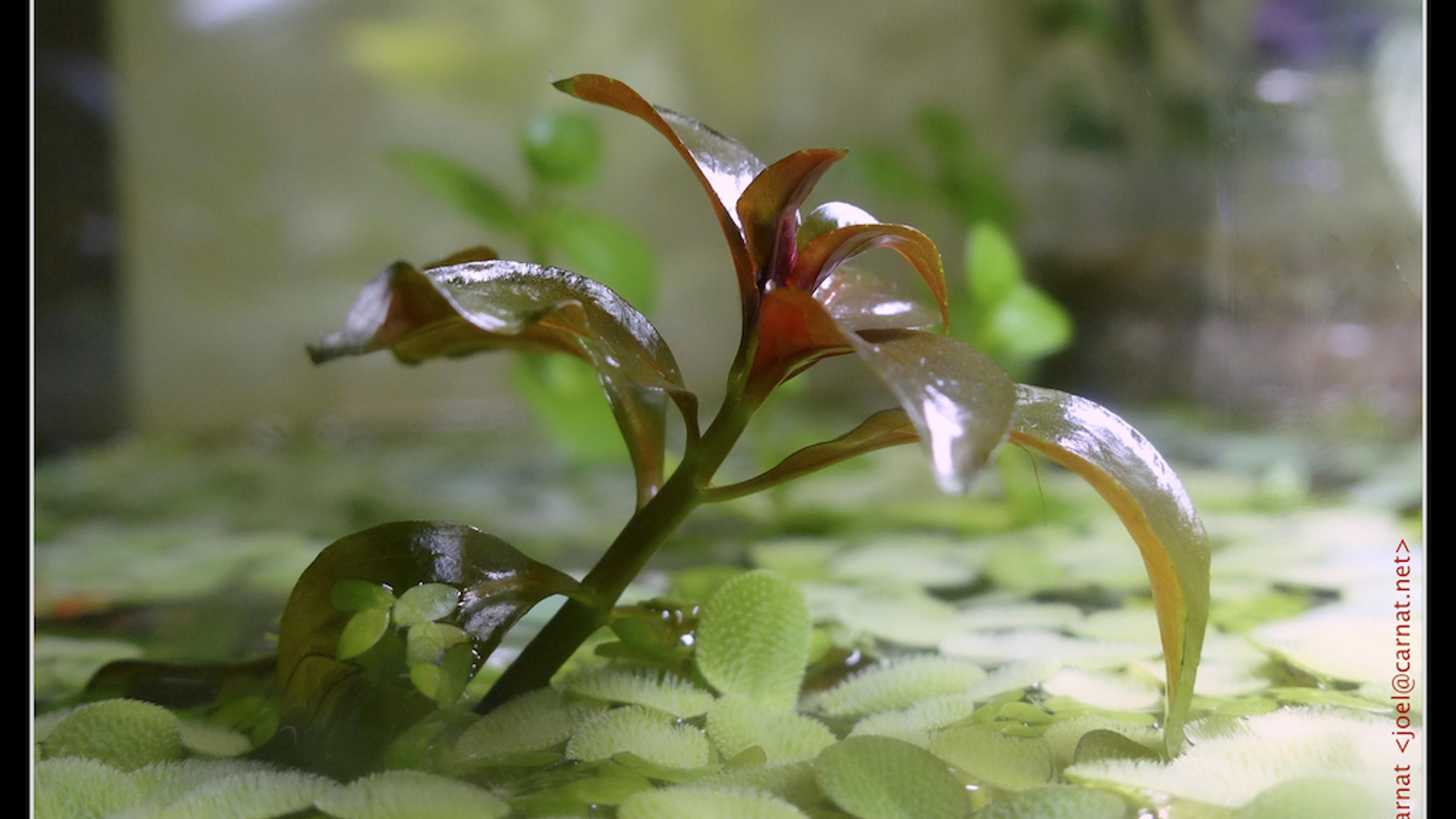
In this guide
Achieving proper Ludwigia repens care for red leaves requires moderate-to-high lighting of 40-60 PAR, regular dosing of bioavailable iron, and stable water conditions within 72-79°F. This North American stem plant adapts readily to low-tech aquariums without pressurized CO2, but responds to intense illumination and balanced water-column nutrition with dense, ruby foliage.
| Parameter | Recommended Target | Tolerable Range |
|---|---|---|
| Water Temperature | 72-79°F (22-26°C) | 64-82°F (18-28°C) |
| pH Range | 6.5-7.2 | 6.0-7.8 |
| General Hardness (GH) | 4-10 dGH | 2-16 dGH |
| Carbonate Hardness (KH) | 2-6 dKH | 1-12 dKH |
| Light Intensity (PAR) | 40-60 µmol/m²/s | 25-90 µmol/m²/s |
| CO2 Concentration | 15-25 ppm | None required (0-30 ppm) |
| Nitrate (NO3-) | 10-20 ppm | 5-30 ppm |
| Phosphate (PO4³-) | 1.0-2.0 ppm | 0.5-3.0 ppm |
Water parameters and tank requirements for Ludwigia repens
Native to swamps, ponds, and slow streams throughout North and Central America, Ludwigia repens belongs to the evening primrose family (Onagraceae). In natural waterways, it grows submersed and emersed along damp banks, forming creeping mats that produce small yellow flowers at the leaf axils.
In home aquariums, this species tolerates a wider water chemistry envelope than most red stem plants. It thrives across a pH range of 6.5-7.2, though established stems handle fluctuations between 6.0 and 7.8 without melting. General hardness between 4-10 dGH supplies sufficient calcium and magnesium for cell walls, yet the plant accepts harder water up to 16 dGH.
Thermal tolerance reflects its temperate to subtropical origins:
- Stems flourish at standard tropical aquarium temperatures of 72-79°F (22-26°C).
- Cool-water tanks down to 64°F (18°C) remain safe, slowing growth without collapsing tissue.
- Upper temperatures should stay under 82°F (28°C) to prevent rapid respiration from depleting stored energy.
- Moderate water movement from a filter outlet sweeps organic debris away from leaf surfaces and delivers dissolved nutrients past the leaf boundary layer.
How do you achieve deep red coloration in Ludwigia repens?
Under modest light levels, Ludwigia repens produces olive-green upper leaves paired with pale pink undersides. Developing deep red foliage across the entire leaf surface requires coordinating light intensity, micronutrient availability, and dissolved carbon.
Light intensity and photoperiod
Red coloration in aquatic stems is driven by anthocyanin production. Aquatic plants synthesize anthocyanin pigments to protect chloroplasts from excess radiant energy under strong light. To trigger this protective pigmentation, aquarium lighting must deliver a photosynthetically active radiation (PAR) reading of 40-60 µmol/m²/s at the substrate line. Near the water surface, PAR readings of 80-100 stimulate ruby coloration along the crown of the stem.
Standard 6500K daylight LEDs support healthy growth, but fixtures incorporating 660 nm deep-red and 450 nm royal-blue diodes stimulate anthocyanin synthesis much more effectively. Run lighting on a steady photoperiod of 7-8 hours daily. Extending light cycles beyond 9 hours rarely deepens leaf color and frequently triggers green spot or hair algae.
Iron supplementation and anthocyanin production
Iron acts as an essential cofactor for enzyme pathways that build both chlorophyll and anthocyanin pigments. When iron is deficient, new leaves emerging at the growing tip appear faded, taking on a washed-out yellow or dull pink cast rather than deep red.
Dose a chelated iron fertilizer into the water column two to three times weekly:
- Use Fe-DTPA chelated iron in tanks where the pH remains below 7.0.
- Switch to Fe-EDDHA chelated iron if your water tests at pH 7.2 or higher, because standard Fe-EDTA binds with minerals and precipitates at higher pH levels.
- Target a stable iron concentration between 0.05-0.1 ppm in the water column. Avoid large weekly pulse doses that trigger algae, preferring smaller, frequent micro-dosing.
CO2 injection versus low-tech setups
Pressurized carbon dioxide injection is beneficial though not mandatory for Ludwigia repens. This adaptability distinguishes it from more demanding red stems such as Rotala rotundifolia varieties, which often stunt without supplemental gas.
In an unpressurized low-tech tank, atmospheric exchange supplies roughly 2-3 ppm of dissolved CO2. Under these conditions, Ludwigia repens grows steadily and displays warm bronze, orange, or copper-toned leaves. Adding pressurized CO2 to maintain 15-25 ppm accelerates photosynthetic rates, tightens the distance between leaf nodes, and deepens ruby pigmentation across all leaf surfaces.
Substrate and fertilizer requirements
Ludwigia repens develops extensive root structures while simultaneously taking up dissolved nutrients through its submerged foliage. Supplying nutrients through both pathways yields the fastest growth and thickest stems.
- Nutrient-loaded aquasoil: Planting stems into active clay aquasoil gives roots immediate access to iron, potassium, and trace minerals. The mild buffering effect also keeps the root zone slightly acidic, aiding nutrient uptake.
- Inert sand or gravel beds: If growing stems in plain sand or fine gravel, insert commercial root tabs containing iron and macronutrients directly beneath each grouping. Replace these tabs every 8-10 weeks as root feeding depletes local stores.
- Maintain water column nitrate (NO3-) between 10-20 ppm and phosphate (PO4³-) around 1.0-2.0 ppm. Starving the water column of nitrogen to force red colors can backfire with Ludwigia repens, leading to premature leaf shedding.
- Potassium deficiency shows up quickly on older foliage as tiny pinholes surrounded by yellow halos, which eventually tear and cause lower leaves to drop off. Maintain potassium levels around 10-15 ppm through regular liquid fertilizer additions.
How to plant, prune, and propagate Ludwigia repens stems
Proper planting spacing and regular trimming determine whether stems grow as lanky, bare stalks or mature into dense, colorful bushes.
Initial planting technique
New stems purchased from local shops usually arrive banded together with lead strips or packed in rockwool plugs:
- Carefully unwrap lead bands and peel away rockwool under running tap water to free the roots without tearing the stem.
- Cut away crushed or bruised stem tissue at the base with sharp scissors, as damaged cells rot quickly once buried in substrate.
- Strip off all leaves from the bottom two nodes to expose bare stem joints where adventitious roots will emerge.
- Use angled pinsettes to grip the stem base and press it 1.5-2 inches deep into the substrate at a 45-degree angle. This angled placement anchors the stem firmly and prevents it from floating upward.
- Space individual stems 0.75-1.0 inch apart. Avoid grouping several stems into a single hole, as crowded stems block water circulation and rot at the substrate line within two weeks.
Pruning for dense bushy growth
Left unmanaged, Ludwigia repens exhibits strong apical dominance. The central tip shoots straight toward the water surface while sending out few lateral branches.
Pinching or cutting the main stem halts vertical growth and stimulates dormant buds at the node directly below the cut. Within 7-10 days, two new side shoots will emerge from that single cut stem, doubling the foliage volume. Once stems grow to two-thirds of tank height, snip them back 3-4 inches above the substrate. Repeating this trimming process over several weeks transforms sparse vertical stalks into a compact, rounded midground hedge.
Propagating healthy stem cuttings
Propagating Ludwigia repens is straightforward and provides an ongoing supply of new stems:
- Step 1: Select vigorous top trimmings measuring 4-6 inches in length with healthy red leaves.
- Step 2: Make a clean cut just beneath a leaf node using sharp trimming scissors to minimize cellular damage.
- Step 3: Remove the lowest pair of leaves from the cutting to leave a clean section of bare stem.
- Step 4: Push the fresh cutting directly into the substrate in open tank areas. The cutting will anchor with fresh roots within 5-7 days and begin active upward growth within two weeks.
How do you prevent lower leaf drop and stem rot?
Hobbyists frequently encounter bare lower stems where the bottom 4-6 inches lose foliage, topped by a cluster of leaves near the water surface. Identifying the cause helps restore full-stem foliage.
- Light deprivation from dense canopies: As upper branches multiply and spread out, they form an umbrella that blocks light from reaching lower leaf sets. When light falls below 20-25 PAR near the substrate, the plant sheds shaded lower leaves because they consume more energy through respiration than they produce through photosynthesis. Thin out older stems during regular maintenance to allow illumination to strike the stem bases.
- Potassium depletion: When potassium runs low, the plant mobilizes this nutrient from older lower leaves to support new growth at the tip. Increase potassium dosing if lower leaves develop small pinholes before turning translucent and dropping.
- Planting stems too closely cuts off oxygenated water flow around the stem bases. Anaerobic bacteria quickly attack the trapped organic matter, turning the bottom of each stem black and mushy. Always plant stems individually with clear space between stalks.
- Algaecide sensitivity: Glutaraldehyde-based liquid carbon products can melt the delicate foliage of Ludwigia repens if squirted directly onto leaves. If treating algae with spot treatments, turn off circulation pumps and keep the dosing syringe well away from Ludwigia crowns.
Where should you place Ludwigia repens in an aquascape?
Because stems naturally reach 12-20 inches (30-50 cm) in height with broad ovate leaves, Ludwigia repens works best in the midground or background zones of planted aquariums.
Dutch streets and background groupings
In traditional Dutch-style aquascapes, aquarists plant stems in ascending terraces called Dutch streets. Arranging a sloping diagonal line of Ludwigia repens that starts in the midground and rises toward the rear glass creates strong visual depth. Its spade-shaped leaves provide a distinct textural break behind carpet species like Monte Carlo.
Midground groupings also pair cleanly with compact bush plants like Staurogyne repens, which conceal the lower stem bases of the Ludwigia. Aquarists who enjoy contrasting stem shapes often position Ludwigia repens alongside green and red variations of Ludwigia palustris, creating subtle leaf size differences between companion stem groups.
Compatible aquarium plants and fauna
Ludwigia repens thrives alongside gentle community species that do not damage broad aquatic foliage. Small schooling fish like neon tetras, harlequin rasboras, and celestial pearl danios weave through stem thickets and utilize the upper leaf canopy for cover. Freshwater dwarf shrimp and nerite snails graze micro-algae from leaf blades without harming the underlying plant cuticle.
Avoid pairing Ludwigia repens with herbivorous fish such as silver dollars, large goldfish, or aggressive digging cichlids. These species readily uproot newly planted cuttings and can strip tender foliage down to bare stalks within hours.
Frequently asked questions
How much light does Ludwigia repens need to turn red?
Ludwigia repens needs moderate-to-high lighting delivering 40-60 PAR at the substrate to develop deep ruby foliage. Under low light below 30 PAR, the plant remains healthy but retains olive-green upper leaves with pale pink undersides. Providing 7-8 hours of daily illumination from full-spectrum LEDs equipped with red diodes maximizes anthocyanin production.
Can you grow Ludwigia repens without CO2 injection?
Yes, Ludwigia repens grows well in low-tech aquariums without pressurized CO2 injection. Without supplemental gas, growth is slower and leaf coloration shifts toward warm bronze or orange rather than deep crimson. Maintaining steady liquid fertilizer dosing and moderate lighting keeps non-CO2 stems compact and healthy.
Why are the bottom leaves falling off my Ludwigia repens?
Lower leaves drop primarily due to shading when the upper stem canopy becomes too dense to allow light to reach the base. It also occurs when stems are planted too close together or when water-column potassium is depleted, forcing the plant to pull nutrients from older foliage. Trimming the top growth and spacing stems at least half an inch apart prevents base defoliation.
How do you propagate Ludwigia repens cuttings?
Cut a healthy 4-6 inch stem top with sharp aquascaping scissors just below a leaf node. Strip off the bottom two sets of leaves to expose bare nodes, then push the stem 1.5-2 inches into the substrate. The cutting will develop new anchoring roots within 5-7 days.
How does Ludwigia repens differ from Ludwigia palustris?
Ludwigia repens produces broader, ovate leaves and thicker stems that tend to grow vertically toward the surface. Ludwigia palustris features smaller, narrower leaves and often turns red under lower light thresholds than repens. Both species share similar water parameter tolerances and ease of care in home aquariums.
Related guides
Limnophila Sessiliflora Care: Planting, Lighting, and Pruning Guide
Limnophila sessiliflora is a fast-growing, feathery background stem plant that thrives in low-tech freshwater aquariums. This guide covers ideal water parameters, light levels, propagation methods, and regular pruning techniques to prevent lower-stem leaf loss.
Staurogyne Repens Care: How to Grow and Prune a Dense Carpet
Discover how to cultivate Staurogyne repens as a thick foreground bush or creeping carpet. Master intentional pruning to force lateral runners and keep stems compact.
Aquarium CO2 Drop Checker Color Chart and 4 dKH Guide
An aquarium CO2 drop checker provides an ongoing visual readout of dissolved carbon dioxide levels using 4 dKH buffer and bromothymol blue. Learn how to interpret color shifts, position the glass reservoir, and prevent livestock toxicity.
Root Tabs vs Liquid Fertilizer Aquarium Guide: Substrate and Water Column Feeding
Aquatic plants absorb nutrients through their root systems, their leaves, or both. Understanding whether your species require substrate root tabs or water column liquid fertilizer prevents nutrient deficiencies and controls nuisance algae.
Aquarium Plant Melting in Established Tanks: Causes and Solutions
Sudden foliage collapse in an established planted aquarium points to acute environmental disruption rather than normal emersed growth transition. Learn how to pinpoint CO2 crashes, mineral imbalances, temperature spikes, and chemical burns to save damaged root crowns.
Amazon Sword Nutrient Deficiencies: Leaf Symptoms, Causes, and Root Fixes
Amazon sword nutrient deficiencies quickly reveal mineral shortages through yellowing blades, pinholes, and stunted crowns. Targeting the substrate with iron and potassium root tabs restores balanced growth.
Photo by Djlayton4 , Daniel J. Layton on Wikimedia Commons (CC BY-SA 3.0)