
Pearl Gourami Care: Tank Size, Temperament, and Tank Mates Guide
Learn how to care for graceful pearl gouramis, covering tank size, water chemistry, planted layouts, male-female dynamics, and peaceful tank mates.

By Sharon Ben-Moshe, Founder, The Aquarium Adviser
Published / 4 min read
In this guide
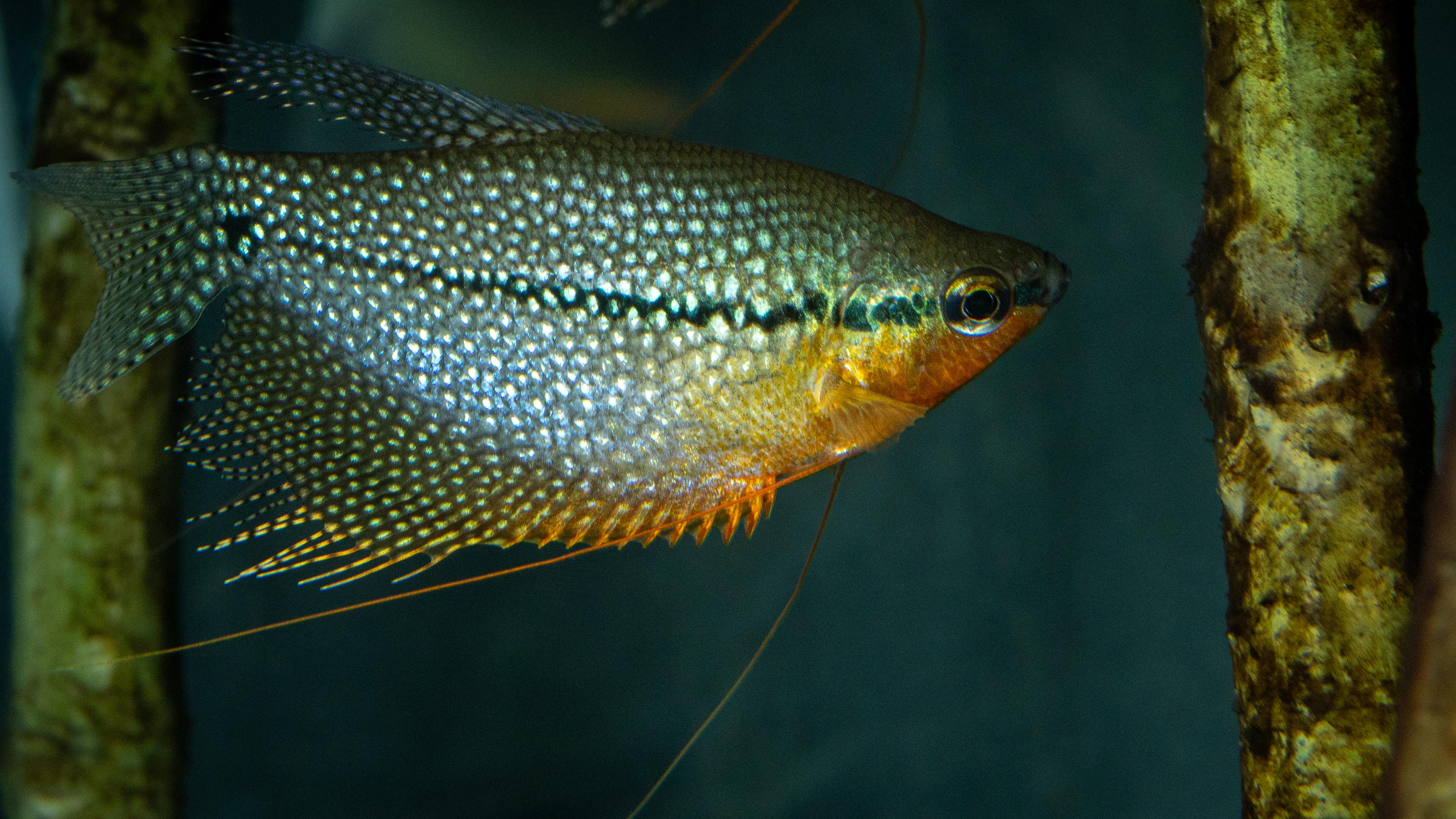
Pearl gouramis are peaceful, lace-patterned labyrinth fish that serve as majestic centerpiece inhabitants for mature planted community aquariums.
Scientifically classified as Trichopodus leerii (formerly Trichogaster leeri), the pearl gourami is indigenous to the low-lying swamps, peat bogs, and shallow streams of Thailand, Malaysia, and Indonesia. For biological data, read the Wikipedia overview of the Pearl gourami.
Covered from head to tail in shimmering pearlescent flecks and highlighted by an orange-red breast on adult males, pearl gouramis bring unmatched elegance without the territorial aggression common to three-spot gouramis. Their modified pelvic fins act as sensitive sensory feelers that they use to touch and explore surrounding plants and substrate.
Aquarium Size and Setup Requirements
Pearl gouramis attain an adult length of 4.5 to 5 inches (11-12 cm). Although they are relatively calm swimmers, their adult size requires a minimum tank volume of 30 gallons for a single fish or pair, and 40-55 gallons for a small group.
Create a lushly planted environment that mimics their slow-moving natural waters:
- Tall background stem plants like Vallisneria and Amazon swords
- Floating plants such as frogbit, dwarf water lettuce, or hornwort
- Driftwood branches positioned to break sightlines across the tank
- Dark substrate to contrast their silver-pearlescent sheen
| Parameter | Recommended Specification | Notes |
|---|---|---|
| Temperature | 77-82°F (25-28°C) | Requires stable tropical warmth |
| pH Range | 6.0-7.5 | Slightly acidic to neutral preferred |
| Hardness | 4-12 dGH | Moderate water hardness |
| Minimum Tank Size | 30 Gallons (single/pair) | 40-55 Gallons (small harem) |
| Water Movement | Low / Calm surface | Needed for bubble nest construction |
Keep water flow gentle. Pearl gouramis struggle against high-velocity currents, and strong surface turbulence will disrupt their breathing and destroy bubble nests. Baffle filter outputs or use low-flow canister spray bars directed toward the glass. Compare their setup to our guides on honey gourami care and sparkling gourami care.
The Labyrinth Organ and Surface Health
Like all anabantoids, pearl gouramis possess an auxiliary breathing apparatus known as the labyrinth organ. This vascularized organ enables them to absorb oxygen directly from atmospheric air at the surface when dissolved oxygen in water runs low.
Always keep a tight-fitting glass lid on the aquarium. This maintains a warm, humid pocket of air above the water. Inhaling cold dry room air can shock the labyrinth organ and trigger respiratory stress or bacterial illness.
Ensure there is at least an inch or two of airspace between the water surface and the tank lid so the gouramis can comfortably surface and gulp air whenever needed.
Temperament, Social Structure, and Tank Mates
Pearl gouramis are gentle, shy fish that do best in calm community setups. If kept in groups, house one male with two or three females to distribute male breeding attention evenly. Housing two mature males in tanks under 55 gallons can lead to sparring for dominance.
Compatible tank companions:
- Calm schooling tetras like cardinal, ember, and rummy-nose tetras
- Harlequin rasboras and small peaceful danios
- Corydoras catfish and peaceful loaches
- Bristlenose and clown plecos
Avoid housing pearl gouramis with notorious fin-nippers like tiger barbs or serpae tetras, as well as aggressive cichlids that will nip their delicate pectoral feelers. For insights into labyrinth fish breeding behaviors, check out our guide on gourami bubble nest construction.
Diet and Nutrition
Pearl gouramis are omnivorous and easy to feed. In their native waters, they consume small insects, crustaceans, algae, and larvae:
- High-grade tropical flakes and floating micro-pellets
- Frozen bloodworms, daphnia, mysis shrimp, and artemia
- Freeze-dried tubifex worms
- Vegetable-based spirulina wafers and blanched spinach
Feed twice daily in modest quantities. Their mouths are relatively small for a five-inch fish, so ensure food particles are sized appropriately for easy swallowing. Utilizing a floating feeding ring prevents flakes from dispersing into high-flow areas and lets these slow surface feeders eat comfortably at their own pace.
Courtship, Spawning, and Bubble Nest Maintenance
Pearl gouramis are bubble-nest builders with intricate and fascinating courtship rituals. When ready to breed, the male's orange throat and chest turn deep fiery red, and he begins gathering air bubbles coated with saliva at the water surface among floating plants.
To support successful breeding:
- Set up a shallow breeding tank with warm water (80-82°F) and completely calm surface conditions. Floating plants like hornwort or frogbit are necessary to anchor the nest.
- The male builds a thick raft of bubbles up to six inches across. Once the nest is ready, he courts the female by flaring his fins and leading her beneath the floating raft.
- The pair embraces in a nuptial clasp, during which the female releases buoyant eggs that float up into the bubble nest. The male carefully gathers any stray eggs in his mouth and spits them into the center of the nest.
- Remove the female after spawning, as the male becomes protective of the nest. The male guards the eggs until they hatch around forty-eight hours later.
- Once the fry become free-swimming and leave the bubble nest, remove the male and begin feeding the fry infusoria and liquid fry food.
Frequently asked questions
What size tank do pearl gouramis need?
A single pearl gourami or a bonded pair needs at least a 30-gallon aquarium, while a small harem of one male and two to three females does best in a 40-gallon breeder or larger layout with ample swimming length.
How do you tell a male pearl gourami from a female?
Mature males develop an elongated, pointed dorsal fin, extended fringed filaments on the anal fin, and a vibrant red-orange throat and breast. Females remain slightly smaller, rounder, and retain subdued coloration with rounded fins.
Are pearl gouramis aggressive toward other fish?
Pearl gouramis are widely regarded as the most peaceful large gourami species. While mature males may display territorial posturing toward other males, they are completely peaceful toward unrelated community fish.
Do pearl gouramis breathe atmospheric air?
Yes, pearl gouramis possess a specialized labyrinth organ that allows them to take gulps of atmospheric air directly from the water surface. Ensure there is warm, humid air between the water line and the tank lid.
Related guides
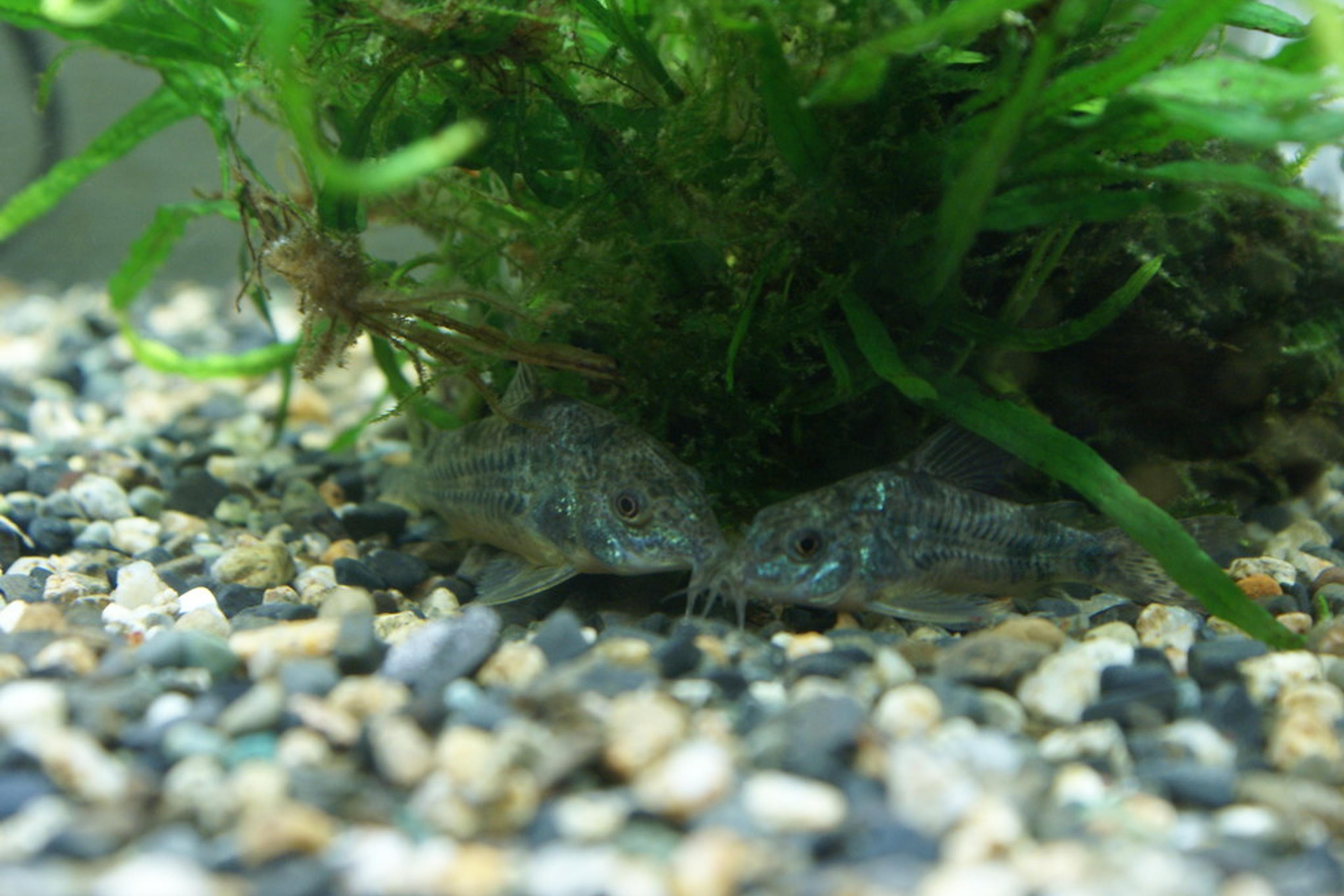
Peppered Corydoras Care: Corydoras Paleatus Setup, Sand Substrate, and Breeding
Learn how to care for peppered corydoras (Corydoras paleatus), provide cool-water community setups, protect barbels on sand, and trigger spawning.
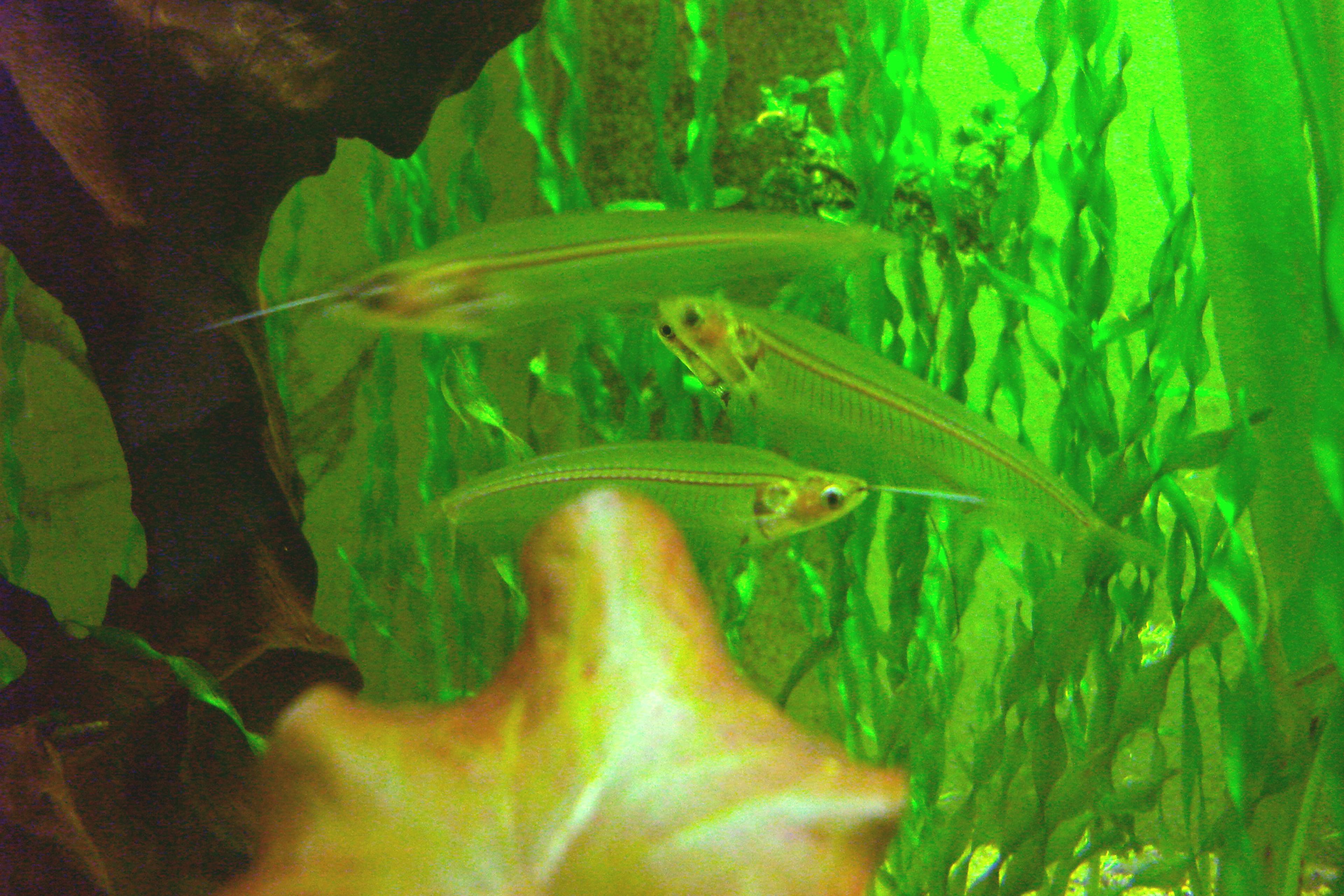
Glass Catfish Care: Kryptopterus Vitreolus Schooling, Water Flow, and Diet
Learn how to care for glass catfish (Kryptopterus vitreolus), maintain tight schooling groups, set up gentle water flow, and feed timid transparent fish.
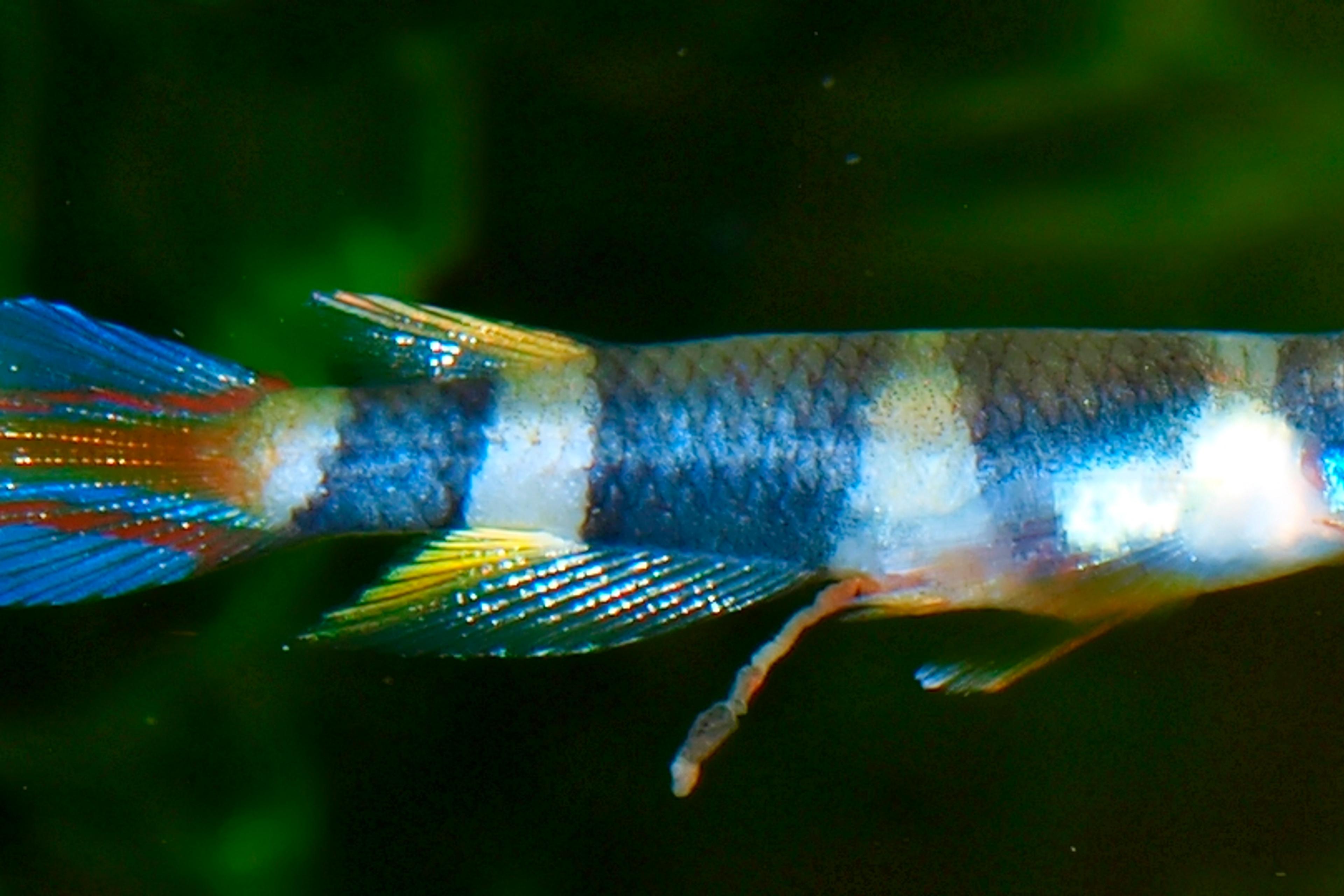
Clown Killifish Care: Epiplatys Annulatus Nano Setup, Feeding, and Flow
Learn how to care for clown killifish (Epiplatys annulatus), set up low-flow nano tanks, provide floating plant cover, and feed surface live foods.
Rosy Barb Care: Pethia Conchonius Schooling, Cooler Water, and Tank Mates
Learn how to care for rosy barbs (Pethia conchonius), manage schooling behavior, provide cooler water temperatures, and protect live plants.
Zebra Loach Care: Botia Striata Schooling, Snail Eating, and Tank Setup
Learn how to care for zebra loaches (Botia striata), maintain peaceful social groups, utilize natural snail control, and select soft sand substrates.
Gold Barb Care: Tank Size, Peaceful Shoaling, and Water Guide
Complete gold barb care guide covering 20-to-30-gallon tank setups, peaceful shoaling, unheated aquarium hardiness, water parameters, and diet.
Photo by Fred Hsu ( Wikipedia:User:Fredhsu on en.wikipedia ) on Wikimedia Commons (CC BY-SA 3.0)