
Dwarf Gourami Care: Tank Size, Compatibility, and Planted Setup Guide
Learn how to care for colorful dwarf gouramis, covering 10-to-20-gallon tank setups, gentle filtration, labyrinth breathing, and peaceful community mates.

By Sharon Ben-Moshe, Founder, The Aquarium Adviser
Published / 4 min read
In this guide
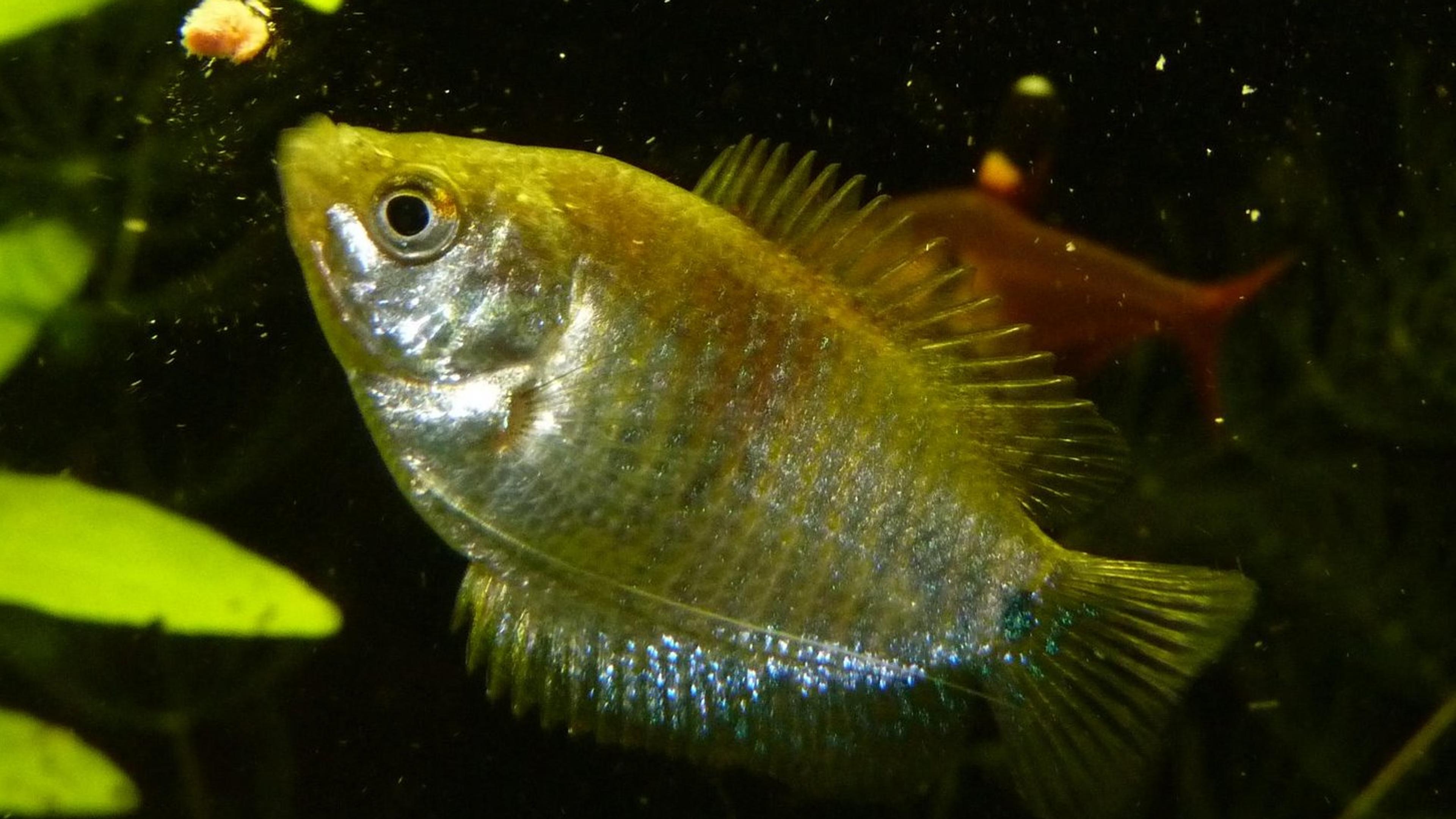
Dwarf gouramis are compact, iridescent labyrinth fish whose vibrant turquoise and crimson stripes make them one of the most popular centerpiece fish for planted aquariums.
Known scientifically as Trichogaster lalius (formerly Colisa lalia), the dwarf gourami is native to slow-moving rivers, rice paddies, and weed-choked canals in India, Pakistan, and Bangladesh. For species taxonomy, refer to the Wikipedia article on Dwarf gourami.
Their modest adult size of 2.5 to 3 inches (6-7.5 cm) and curious personality make them a centerpiece choice for small-to-medium aquariums.
Planted Aquarium Setup and Environmental Needs
Dwarf gouramis naturally inhabit calm, heavily vegetated waters. In a bare, brightly lit aquarium with turbulent water flow, they become stressed and spend their time hiding:
- Tank Size: A 10-gallon tank is the minimum for a single specimen, but a 20-gallon tank provides a stable volume and room for peaceful tank mates.
- Gentle Filtration: Strong currents exhaust dwarf gouramis. Use a gentle sponge filter or a baffled hang-on-back filter that keeps surface water calm.
- Floating Plants: Incorporate floating species like hornwort, frogbit, or salvinia to diffuse harsh LED lighting and provide anchor points for bubble nests.
- Background Flora: Plant tall varieties like Amazon swords, Cryptocorynes, and stem plants around the edges while maintaining swimming lanes in the front.
| Husbandry Factor | Recommended Range | Ideal Target |
|---|---|---|
| Temperature | 74-82°F (23-28°C) | 76-78°F (24.5-25.5°C) |
| pH Level | 6.0-7.5 | 6.8-7.2 |
| General Hardness (GH) | 4-15 dGH | 6-10 dGH |
| Minimum Tank Size | 10 Gallons (single) | 20 Gallons (community) |
| Water Flow | Low / Very gentle | Baffled returns |
For comparisons with other members of the labyrinth family, consult our pearl gourami care guide and our overview of gourami bubble nest construction.
Labyrinth Organ Care and Air Temperature
Like all anabantoids, dwarf gouramis possess a vascularized labyrinth organ that allows them to extract oxygen directly from air gulped at the surface. This evolutionary adaptation helped them survive in stagnant, oxygen-depleted pools in their native range.
To protect the labyrinth organ:
- Always keep a snug aquarium lid in place to retain a pocket of warm, humid air above the water.
- Inhaling dry, chilly room air can shock their respiratory tissues and trigger illness.
- Maintain at least one inch of clearance between the water surface and the tank lid so the fish can surface comfortably.
Temperament and Compatible Community Tank Mates
Male dwarf gouramis are territorial toward other males and similarly shaped labyrinth fish. Keep only one male per tank unless the aquarium exceeds 40 gallons with heavy plant barriers.
Compatible community companions include:
- Peaceful schooling tetras (neon, ember, glowlight tetras)
- Harlequin and chili rasboras
- Corydoras catfish and bristlenose plecos
- Amano shrimp and freshwater snails
Avoid fin-nipping barbs (like tiger barbs) and boisterous semi-aggressive cichlids that will nip the gourami's elongated sensory pelvic feelers.
Diet, Feeding, and Disease Prevention
Dwarf gouramis are omnivorous micro-predators that feed on algae, insect larvae, and small crustaceans:
- Quality flake foods and floating micro-granules
- Sinking spirulina wafers for vegetable matter
- Frozen bloodworms, daphnia, and brine shrimp
- Freeze-dried tubifex worms as occasional protein treats
Feed small portions twice daily. Because commercial dwarf gouramis can be susceptible to viral and bacterial issues, quarantine new specimens for two to three weeks before introducing them to an established community tank. For detailed diagnosis and symptoms, review our medical guide on iridovirus dwarf gourami disease.
Environmental Enrichment and Territory Design
Dwarf gouramis are inquisitive fish that explore their surroundings using their sensitive, thread-like pelvic fins:
- Visual Barriers: Arrange driftwood branches and tall plants to divide the tank into multiple distinct zones. This gives females and shy community fish places to retreat.
- Floating Plant Mats: Provide floating plants where males can anchor their saliva-coated bubble nests. Calm surface water is necessary to keep nests intact.
- Shaded Rest Areas: Provide caves or shaded corners where the gourami can rest during bright daylight hours.
Water Quality and Quarantine Protocol
Because commercially farmed dwarf gouramis can be vulnerable to bacterial and viral pathogens, biosecurity is critical:
- Quarantine New Stock: Always quarantine new dwarf gouramis in a separate tank for two to three weeks before introducing them to your display tank.
- Zero Ammonia and Nitrite: Dwarf gouramis have delicate gills and labyrinth tissues; maintain zero detectable ammonia and nitrite, and keep nitrates below 15 ppm.
- Stable Temperature: Use an adjustable heater with a thermometer to prevent temperature dips that weaken their immune defenses.
Common Beginner Mistakes and Husbandry Checklist
To ensure your dwarf gourami lives a long, healthy life, avoid these frequent husbandry mistakes:
- Avoiding Strong Water Turbulence: Placing a dwarf gourami in a high-current tank forces the fish to fight water movement constantly, leading to chronic exhaustion and weakened immunity.
- Providing Surface Access: Never overfill an aquarium to the point where no air gap remains beneath the cover. Dwarf gouramis must be able to surface easily to breathe atmospheric air.
- Maintaining Feeding Variety: Relying solely on dry flake food often causes digestive issues. Supplement regularly with frozen daphnia, cyclops, and spirulina crisps.
- Careful Acclimation: Use drip acclimation over 45 minutes when introducing a new specimen to equalize water parameters and prevent osmotic shock.
- Monitoring Interaction: Keep a close eye on community companions during the first week to confirm that faster fish do not steal food before the gourami can feed.
Frequently asked questions
Can two male dwarf gouramis live together in the same tank?
In tanks under 30 gallons, housing multiple males is not recommended. Male dwarf gouramis are territorial toward their own kind and will spar over territory. Keep a single male or a bonded male-female pair.
What size tank does a dwarf gourami need?
A single dwarf gourami can be kept in a 10-gallon aquarium, but a 15-to-20-gallon planted tank is ideal for a peaceful community layout with compatible schooling companions.
Why does my dwarf gourami visit the water surface so often?
Dwarf gouramis possess a labyrinth organ that enables them to breathe atmospheric air directly from the surface. Periodic surface visits to take gulps of air are completely normal and healthy.
What is Dwarf Gourami Iridovirus (DGIV)?
DGIV is a serious, species-specific viral infection affecting commercially bred dwarf gouramis that causes lethargy, abdominal swelling, and color loss. Purchasing healthy stock from reputable sources is essential.
Related guides
Peppered Corydoras Care: Corydoras Paleatus Setup, Sand Substrate, and Breeding
Learn how to care for peppered corydoras (Corydoras paleatus), provide cool-water community setups, protect barbels on sand, and trigger spawning.
Glass Catfish Care: Kryptopterus Vitreolus Schooling, Water Flow, and Diet
Learn how to care for glass catfish (Kryptopterus vitreolus), maintain tight schooling groups, set up gentle water flow, and feed timid transparent fish.
Clown Killifish Care: Epiplatys Annulatus Nano Setup, Feeding, and Flow
Learn how to care for clown killifish (Epiplatys annulatus), set up low-flow nano tanks, provide floating plant cover, and feed surface live foods.
Rosy Barb Care: Pethia Conchonius Schooling, Cooler Water, and Tank Mates
Learn how to care for rosy barbs (Pethia conchonius), manage schooling behavior, provide cooler water temperatures, and protect live plants.
Zebra Loach Care: Botia Striata Schooling, Snail Eating, and Tank Setup
Learn how to care for zebra loaches (Botia striata), maintain peaceful social groups, utilize natural snail control, and select soft sand substrates.
Gold Barb Care: Tank Size, Peaceful Shoaling, and Water Guide
Complete gold barb care guide covering 20-to-30-gallon tank setups, peaceful shoaling, unheated aquarium hardiness, water parameters, and diet.
Photo by Fred Hsu ( Wikipedia:User:Fredhsu on en.wikipedia ) on Wikimedia Commons (CC BY-SA 3.0)